Reports · Petu POS Editorial Team
In brief
This guide explains a restaurant service workflow. Review how the process affects orders, staff, devices, costs, and daily handoffs. Confirm current product capabilities, then test the approach with your team during a representative service before adopting it in routine operations.
01
Plan the workflow
Which restaurant sales reports matter every day? is easier to understand when it is connected to the rhythm of a real restaurant. Turn closing numbers into useful decisions matters because the counter, dining room, kitchen, and manager all need the same information at the right moment. A good system should remove repeated work instead of asking the team to learn a complicated process. The fastest way to get real value is to write down the exact order flow your outlet follows today, then use software to support that flow rather than forcing the team to change habits overnight. This makes the launch smoother, helps new staff learn faster, and gives the owner a clear view of what is working in real service.
02
Prepare the outlet
Start by mapping the shift from the first order to the final report. Decide who enters items, who confirms the kitchen ticket, who collects payment, and who reviews the numbers. When responsibilities are visible, small restaurants can move faster without losing control. This is also the right time to standardize menu names, prices, categories, taxes, tables, and staff permissions. If the menu is consistent, the team spends less time explaining dish details and more time serving guests. A well-structured POS setup creates fewer mistakes, faster handoffs, and better confidence at the counter.
03
Coordinate the team
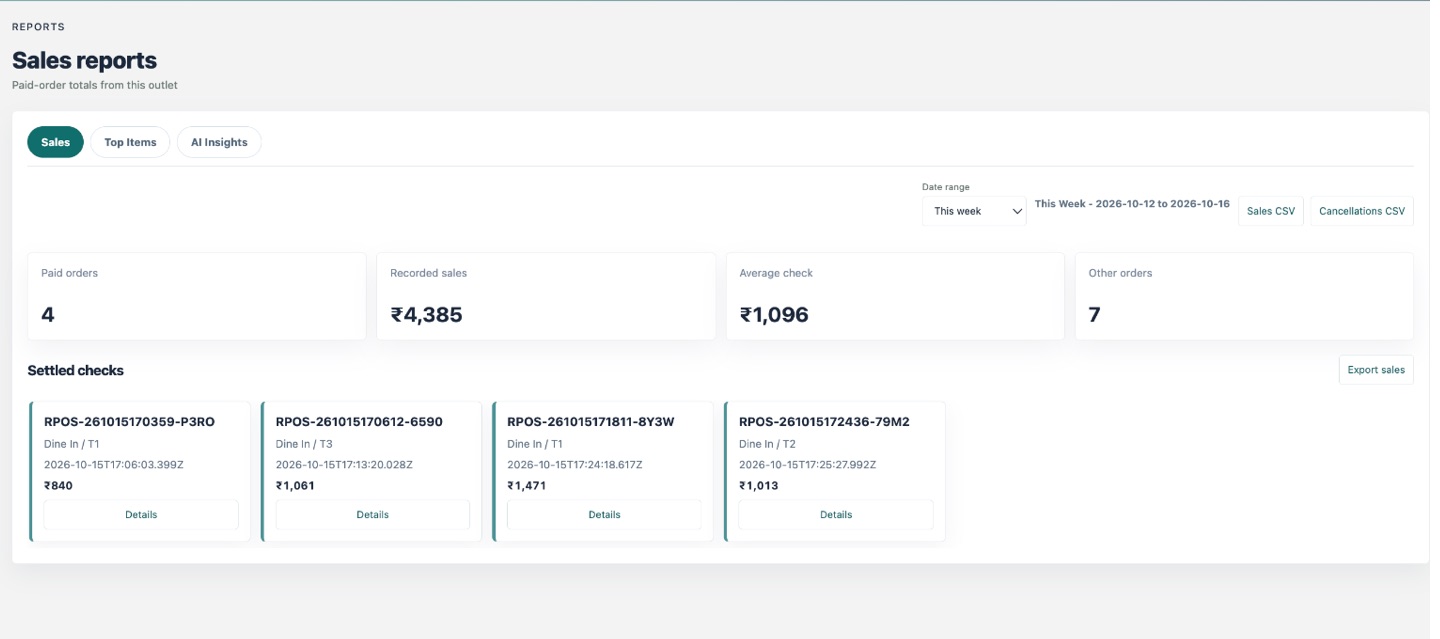
The best improvement is usually the one the team can use during a busy service. Search should be quick, totals should be easy to read, and the next action should be obvious. Managers need reports that answer practical questions: which items sold, which tables are still open, what was cancelled, and whether stock needs attention. That is why a modern outlet workspace should combine billing, KOT, floor view, inventory, and daily sales reports in one place. When every section is connected, restaurant staff can move between tasks without losing the thread of the guest experience.
04
Review daily operations
AI Powered POS brings these details into one outlet workspace for billing, KOT, tables, inventory, and reports. Teams can begin with a ready-made demo, understand the flow, and then configure the menu and brand details for their own restaurant. A short trial is useful because it lets the actual cashier and kitchen team test the workflow before launch. During that trial, check if the menu is easy to search, if items reach the kitchen correctly, if payments are quick, and if the closing report tells the full story of the shift. A good demo should feel like a real day of service, not a static sample page.
05
Test and improve the process
Whether you run a cafe, QSR, fine-dine restaurant, takeaway counter, or cloud kitchen, the goal is the same: fewer handoff mistakes and a clearer shift. Review the process after one service, note where people hesitate, and adjust the workspace before adding more complexity. Small updates such as better labels, cleaner categories, tighter table states, or clearer payment history can improve speed dramatically. The right restaurant software should feel like a helpful part of service, not another task to manage. Begin with the workflow that matters most today, measure the time saved, and expand from there. Read this guide with your own menu, tables, team, and service style in mind, then try AI Powered POS to see how the ideas work in a live demo for your outlet.